

What Does Quality Really Cost in Utility Vegetation Management?
What Does Quality Really Cost in Utility Vegetation Management?
By David Burke, Director of Operations, ACRT
Quality is an expectation in utility vegetation management (UVM), but achieving it requires an investment.
Training employees, planning work, communicating with customers, inspecting work, and reviewing performance all carry costs. But so do missed vegetation, work that does not meet specifications, customer complaints, repeat visits, and other forms of rework.
Understanding the relationship between those expenses is at the heart of the Cost of Quality, a project management concept that examines the financial impact associated with meeting established quality requirements.
Looking Beyond the Initial Cost
Cost of Quality provides a framework for examining the resources devoted to achieving quality alongside the costs that arise when expectations aren’t met. At its core, the formula has two fundamental components: Cost of Good Quality (CoGQ) and Cost of Poor Quality (CoPQ).
Cost of Good Quality is the investment required to help services meet established requirements and customer expectations. It includes:
- Prevention costs: Training, pre-inspection, notification, and other investments intended to help work meet expectations from the beginning.
- Appraisal costs: Auditing, customer surveys, and other activities used to evaluate whether expectations are met.
Cost of Poor Quality is the financial impact when services fail to meet requirements or customer expectations. It includes:
- Internal failure costs: Rework and customer-service remediation required when problems are identified.
- External failure costs: Potential consequences such as litigation, settlements, and future customer issues.
Put into a formula:
- CoGQ = Prevention Costs + Appraisal Costs
- CoPQ= Internal Failure Costs + External Failure Costs
And ultimately:
- Total Cost of Quality (CoQ) = CoGQ + CoPC
The formula highlights an important distinction. Some quality costs are proactive investments made to help work go right the first time. Others are reactive costs incurred because something didn’t.
Prevention and appraisal costs are generally easier to predict, control, and budget for. Organizations can plan for training, inspections, and quality evaluations as part of their normal operations. Failure costs, on the other hand, are less predictable. Rework, customer complaints, and other unexpected issues can vary significantly from what was originally planned, creating additional expenses and disrupting schedules and resources.
The objective isn’t necessarily to spend less on quality. It’s to understand where we’re spending those resources and whether investing more on the front end can help reduce unpredictable costs later.
What Rework Really Costs
One useful way to understand this concept comes from the telecommunications industry, which has several similarities to UVM. Technicians travel to properties, interact with customers, perform a service, and are expected to complete quality work the first time. In both industries, returning to correct work can be costly.
In one telecommunications example, more than 25% of jobs required follow-up visits. The impact went well beyond another trip to the property. Repeat visits increased job duration and labor costs, reduced productivity, required additional crews, and contributed to customer dissatisfaction and complaints.
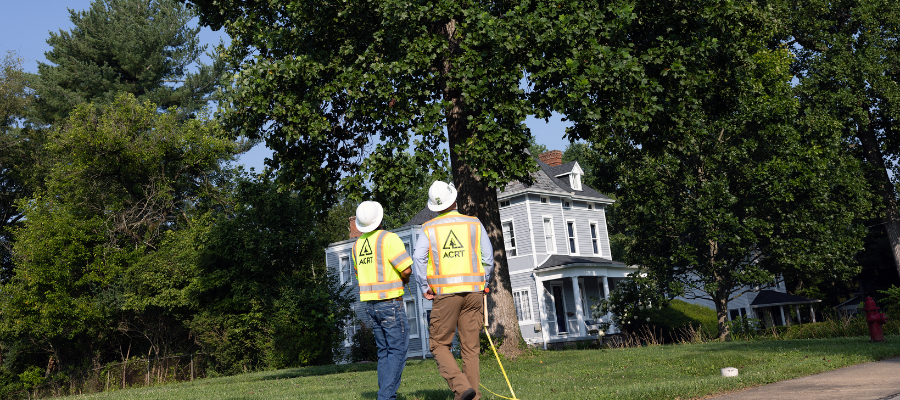
The parallels to vegetation management are clear. Missed vegetation, improper pruning, incomplete work, or work that doesn’t meet specifications can require additional resources to correct. Every return trip represents time and capacity that could otherwise be directed toward planned work.
More importantly, the factors contributing to poor quality often begin well before work reaches the field. Limited training standardization, weak job planning, and incomplete customer or job information can all contribute to rework.
That means reducing the cost of poor quality requires us to look at the entire process, not just what happens when something goes wrong.
Shifting Resources Toward Prevention
In the telecommunications example, the organization responded with a multi-year initiative focused on first-time quality. That included enhanced training, better planning before dispatch, matching technicians appropriately to the work, improved customer communication, pre-job data validation, and post-job review.
The results included a 20 to 30% reduction in repeat visits, improved customer service scores, lower costs per job, and greater technician efficiency.
There is an important lesson here for UVM: spending less isn’t necessarily the same as reducing costs.
Training, planning, inspections, auditing, and communication require resources. But those investments can help prevent much more disruptive costs associated with rework and failure.
The question becomes where an organization wants to incur its quality costs: proactively through prevention and appraisal, or reactively through failure and remediation.
Building Quality into the Process
Understanding Cost of Quality starts with understanding where quality-related costs are occurring within an organization.
That requires good data, but data alone isn’t enough. Employee involvement and continuous review are also essential. Common challenges can include a lack of data, resistance to change, and limited resources.
There are several practical ways UVM organizations can begin strengthening their approach:
- Standardize processes and specifications and document them well.
- Invest in effective onboarding and training with clear benchmarks.
- Collect and regularly review performance data.
- Gather feedback from employees and customers.
- Communicate results.
- Continue identifying opportunities for improvement.
The key is to make quality part of the process rather than evaluating something after the work has been completed.
Quality as an Investment
Cost, productivity, and quality shouldn’t be viewed independently. A lower upfront cost doesn’t necessarily represent a better outcome if work must be revisited, corrected, or addressed through additional customer service.
Looking at the Cost of Quality gives UVM organizations a broader view. It can help identify where resources are being lost to rework and where investments in training, planning, standardization, communication, and evaluation could make a difference.
There will always be a cost associated with delivering quality work. The opportunity is to better understand that cost and use it to continuously improve how we plan, perform, and evaluate vegetation management work.
At ACRT, we work alongside utilities to strengthen vegetation management programs through independent expertise, experienced people, and a commitment to continuous improvement. Learn more about our utility vegetation management services.
Related Articles


Wildfire Risk & Defensibility: When Risk Becomes Liability By Bob Urban, Senior Account Manager, ACRT Services Every wildfire season raises the same question for utilities: Are we prepared? As wildfire frequency, intensity, and public, investor, and insurer scrutiny continue to increase, utilities face growing pressure to demonstrate not only that they managed vegetation risks, but[...]
Read More