

Environmental Stewardship and Safety
Environmental Stewardship and Safety
By Anna Davis, Operations Manager, ACRT, and Adrienne Jones, Safety Manager, ACRT
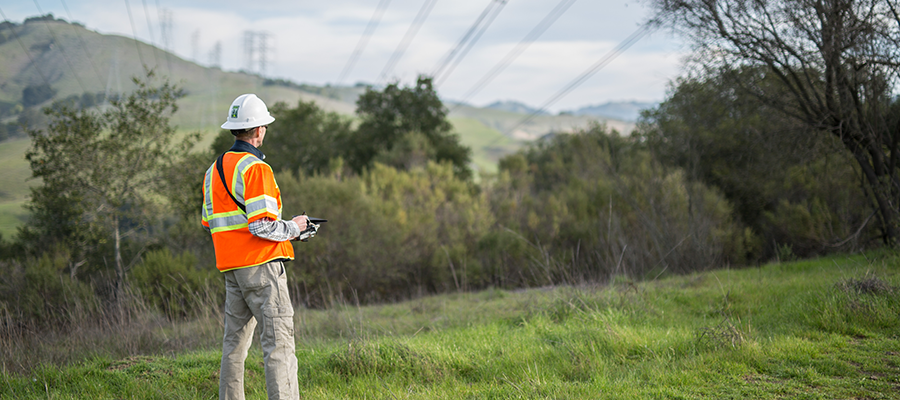
Safety and environmental stewardship go hand in hand. While a utility’s objective for controlling vegetation along rights-of-way may be to increase service reliability, prioritizing safety and environmental stewardship emphasizes how ROWs are maintained. Much in the way that safety promotes the well-being of crews, utility employees, property owners, and the general public, environmentally conscious maintenance methods promote and protect ecosystems along the utility corridor. We’ve all heard the saying “It’s not what you do, but how you do it and why.” Emphasizing safety and environmental stewardship focuses on both the how and the why behind the effort. After all, safety is not just about physical habits but also our attitudes and emotions. Our attitude affects almost all that we do and how we do it. If you have a positive safety attitude, it’s more likely that you’ll exhibit safe behaviors and inspire others to do the same. In this same manner, we each can implement and model environmental stewardship along with safe work practices in order to cultivate and inspire change in our profession.
Our behavior informs and influences our thoughts and feelings. We have much more power than we realize to consciously choose behaviors that will affect our attitude and influence the everyday emotions that can get in the way of our goals and objectives or compromise our safety or commitment to sustainable principles. It simply takes practice.
Thinking and behaving safely is a choice. Managing with an emphasis on environmental stewardship is also a choice. Gone are the days when taking shortcuts and bypassing safe work practices is acceptable. We are at that same precipice with environmental practices. Bat surveys, integrated vegetation management, and pollinator studies are just a few ways to begin to choose environmental stewardship. Resources like the Best Management Practices–Integrated Vegetation Management provide a strong foundation and practical approaches for IVM and can serve as a jumping-off point for managing ROW sustainably. Integrated vegetation management drives efficiencies surrounding safety, reliability, costs, and compliance, among other things. While the full scope of IVM’s capabilities is far beyond what can be encompassed in an article, managing ROW with a selective eye promotes forward-looking behavior. Managing ROW with IVM at the forefront moves away from reactive management and into proactive management. Environmental stewardship continues to be a focal point for many companies and investors who emphasize the importance of environmental, social, and governance, and sustainable investing. In the utility realm, ESG considers how we are impacting the natural world around us. Investors build entire profiles on a company’s environmental policies, and the utility world cannot avoid this.
Ultimately, environmental stewardship is about protecting and maintaining our planet for future generations. There are many decisions we can make, both as individuals and as a part of a team, to support these goals, just as we do when it comes to a positive safety attitude and taking responsibility for the choices we are making. Toward this effort, the practice of pausing is a powerful one. When we catch ourselves with our head out of the game, we can stop and take four seconds to clear our head, refocus, check our surroundings, and review the task at hand. Some important questions we can ask ourselves when it comes to safety are:
- Am I putting myself or others at risk?
- Am I prepared to continue to work safely?
- Am I focused on what needs to get done?
- Am I ready to act to do it safely?
Much like safety, we can ask important questions on our path to sustainability:
- How can I consider the environmental impacts?
- Am I following the requirements of regulatory agencies?
- How can I avoid shortcuts that may result in adverse outcomes for this ecosystem?
- How can I cultivate compatible and native species on the ROW?
- What are my objectives for biodiversity?
Making safety a core value can help to drive sustainability by providing people with the resources they need to do their work without fear of getting hurt or facing repercussions. An influence like time pressure can also wreak havoc on a safe or sustainable mindset. To prevent workplace incidents and enhance sustainability, we can shift our focus towards a more proactive process. This means taking time to consider the options rather than regressing to the autopilot mentality of “We’ve always done it this way.” If we always do what we’ve always done, we will always get the same results, for better or for worse.
Much like safety, education is power when it comes to environmental stewardship. Educate yourself and others! Understanding local ecosystems and the impact we make on them is the first step to making lasting change. Ask yourself, how does your program measure up on environmental stewardship, and what can I (or my organization) do to promote sustainability and biodiversity? The UAA Environmental Stewardship Committee has numerous resources to begin answering many of these questions.
Safety is something that we would never say is “complete” or “finished.” Safety and environmental stewardship are not items to be checked off a list—they are ongoing, continual process improvements. As we gain knowledge and understanding of best practices for environmental stewardship, it is our obligation to leverage that knowledge and implement environmentally sustainable principles and practices. At the end of the day, what we do is important, but it is also how and why we do it that matters.
This article was originally published in the 2024 May/June edition of the UAA Newsline.
Related Articles

Wildfire Risk & Defensibility: When Risk Becomes Liability By Bob Urban, Senior Account Manager, ACRT Services Every wildfire season raises the same question for utilities: Are we prepared? As wildfire frequency, intensity, and public, investor, and insurer scrutiny continue to increase, utilities face growing pressure to demonstrate not only that they managed vegetation risks, but[...]
Read More
Shared Vision, Shared Success: Building a Utility Team Culture By Anna Davis, Operations and Fleet Manager, ACRT What are examples of a good team? I bet you can think of a year that your favorite sports team was really clicking, where they seemed unstoppable. The truth is, a team can be anywhere. Across departments, across[...]
Read More