
Shared Vision, Shared Success: Building a Utility Team Culture
Shared Vision, Shared Success: Building a Utility Team Culture
By Anna Davis, Operations and Fleet Manager, ACRT
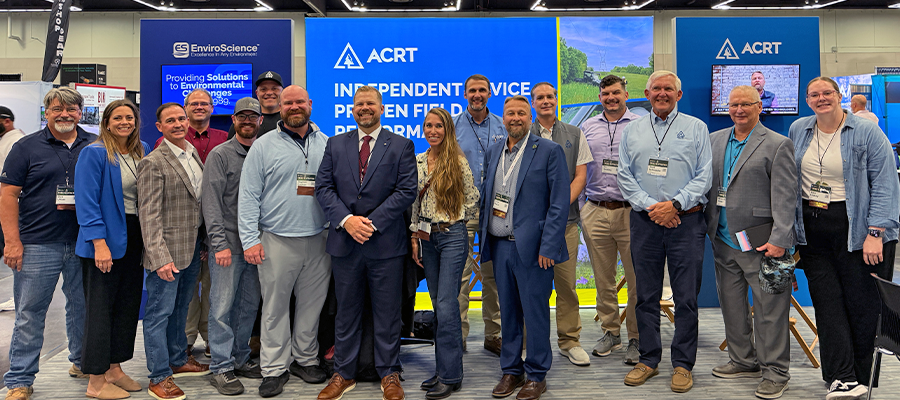
What are examples of a good team? I bet you can think of a year that your favorite sports team was really clicking, where they seemed unstoppable. The truth is, a team can be anywhere. Across departments, across contractors, across organizations. What makes a team is a shared common goal. Clarity of vision.
Utilities are no different and can provide some of the best examples of what it takes to be a team. To have a good team, you have to be a good team member. In many cases, that involves putting some of your needs on the back burner to place the vision and common goal at the forefront. Utilities provide excellent examples of teams formed across multiple different groups of people with very different backgrounds and KPI’s. Any given initiative at a utility can have participants from operations, engineering, finance, IT, and just as many contractors. Each of those groups would argue that they are distinct and different from the others. However, they are brought together to achieve something that the individual cannot do on their own.
A good team is a group of people who buy into the values of the organization.
Building a Utility Team Culture Across Organizations
In the world of environmental stewardship, there is a fair amount of buy-in that needs to be achieved in order to effect change. Especially in programs where the concept of environmental stewardship is new. In many cases, the specifications for maintaining a ROW are deep-seated within the utility itself and the contractors on the system. It can be very difficult to change a culture and a mentality, but if the legwork is done on the front end to produce a quality team, transitions can go much more smoothly. It is hard not only to change how you are maintaining your ROW but also the mentality of your team. Maybe pollinator and migratory bird habitat is something you want to focus on. Generating the buy-in and change of scope can take a lot of retraining and effort, but those changes are most easily made when the team members trust each other and the reason why behind the change is effectively communicated.
Putting Shared Vision into Practice
Those are great concepts, but real-world application can seem out of reach. One of the best examples I have seen of bringing a team together is at Rappahannock Electric Cooperative’s annual Day of Safety. Every person involved with vegetation management on that utility, regardless of the logo on their shirt, attends and participates. The entire group retrains on the scope of work, but part of the day is about continuing education and shaping the future of the program. However, I would argue that the most important aspect of that day is not the content, but the meal shared by the team. Because what makes a good leader, and thus a good team, is establishing that you care about their well-being and them as a person. It is hard to trust and buy into something where you feel like just another number.
You may wonder why this matters. Why does it matter that each person understands and buys into the vision? After all, as long as it’s in the contract, who cares if they believe in it? The answer is simple. It matters because, as a leader, you want your team to be successful. That is, in fact, how your success is defined. But also, there is not a single program, ROW, or project where we can do it alone. We find success in clarity, common goals, and care for one another. Because like it or not, utility vegetation management is a team sport.
Learn how ACRT partners with utilities to build collaborative, safety-focused vegetation management programs.
This article was originally published in the 2026 July/August edition of the UAA Newsline.
Related Articles
What Does Quality Really Cost in Utility Vegetation Management? By David Burke, Director of Operations, ACRT Quality is an expectation in utility vegetation management (UVM), but achieving it requires an investment. Training employees, planning work, communicating with customers, inspecting work, and reviewing performance all carry costs. But so do missed vegetation, work that does not[...]
Read More