
Holistic Resource Management and Integrated Vegetation Management
Holistic Resource Management and Integrated Vegetation Management
By Ryan Meccage, Business Development Manager, ACRT Services
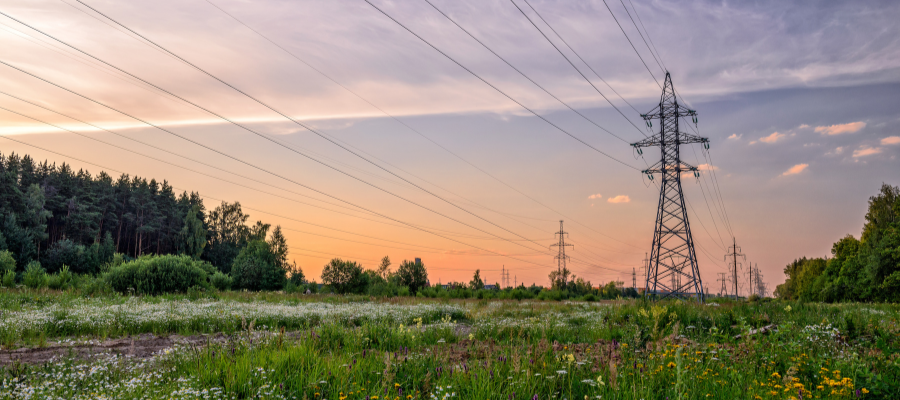
Utility rights-of-way (ROWs) occupy landscapes where ecological health, public safety, and operational reliability intersect. Managing vegetation in these corridors requires approaches that balance energy delivery needs with environmental stewardship, long-term sustainability, and public expectations. Two methodologies, “Holistic Management,” or Holistic Resource Management (HRM) originated by Alan Savory; and Integrated Vegetation Management (IVM), widely practiced in utility vegetation management — share essential philosophical and practical principles. Each emphasizes systems thinking, adaptive decision-making, and a commitment to maintaining or improving ecological function. When viewed together, HRM provides a broad level decision-making framework for vegetation managers, while IVM supplies a complementary set of technical tools and ecological strategies that can be applied within that framework.
Holistic thinking, an interdisciplinary idea that recognizes that “the whole is greater than the sum of its parts,” is increasingly recognized as a foundational skill for navigating complex systems, whether those systems are ecological landscapes, utility ROWs, or modern business environments shaped by rapid technological change. Savory developed this framework for decision making by studying the savannah grasslands of Africa, but it has a much broader application. In our industry, where we work to enable the delivery of safe and reliable energy resources in an evolving technological landscape to dispersed populations that transverse the natural environment, thinking holistically is now more relevant than ever.
At the heart of HRM is the concept of a holistic management model. Savory proposed that all meaningful decisions should be tested against a clearly articulated vision that first identifies the whole under management (all decision makers involved, current resource base, and money) and integrates three inseparable components of a holistic goal: the quality of life desired, forms of production, and the future resource base required to sustain that quality of life. Rather than focusing on segmented outcomes or short-term fixes, HRM pushes decision makers to consider ecological, social, and economic interconnectedness. Decisions are evaluated not only for immediate practicality but also for their long-term contribution to the health and resilience of the landscape. HRM asserts that decisions made in isolation frequently solve one problem while unintentionally creating others.
Utility ROW management fits well within this structure. Decision makers, including utility companies, vegetation managers, landowners, regulatory bodies, and sometimes community stakeholders, must balance operational reliability, regulatory compliance, cost-effectiveness, and environmental responsibility. The quality of life they seek includes safe, consistent electrical service; reduced wildfire risk; healthy ecosystems; and positive public perception. IVM fits into the holistic goal as a form of production, this could also include various contracting strategies. Their future resource base encompasses the vegetative communities within ROWs, the soils supporting those communities, surrounding landowner relationships, contractor expertise, and the utility’s financial and operational sustainability. HRM requires these elements to be considered holistically, preventing the tendency to optimize one variable, such as short-term cost savings, at the expense of long-term ecological or social consequences.
IVM aligns naturally with this philosophy as a systematic approach that uses a combination of mechanical, chemical, biological, and cultural methods to encourage desirable plant communities while limiting incompatible vegetation that could interfere with electrical infrastructure. Its core principle is to manage vegetation by objective, not by prescription. Rather than defaulting to routine mowing or blanket herbicide use, IVM identifies the desired ecological state — often a stable, low-growing plant community — and selects tools that will move the site toward that state most efficiently and sustainably.
The synergy between HRM and IVM becomes clear when considering how the holistic goal informs management choices. For example, if the desired quality of life includes biodiversity enhancement, reduced long-term maintenance costs, and positive community relationships, then the future resource base must include a healthy, resilient plant community. In this context, repeated mechanical clearing that encourages fast-growing, shade-intolerant species may be inconsistent with the holistic goal because it increases maintenance frequency, reduces ecological stability, and may negatively affect public perception. IVM, however, promotes the selective use of herbicides or targeted cutting to shift plant communities toward compatible low-growing species such as shrubs, grasses, and forbs. This approach improves habitat diversity, reduces regrowth rates, and supports pollinators; thereby strengthening the future resource base identified in the holistic goal.
Both HRM and IVM also emphasize feedback loops and adaptive decision-making. In HRM, decisions are tested through questions such as: Does this action address the root cause of the problem? Is it socially, environmentally, and economically sound? How will we monitor results, and what indicators will tell us if we are moving toward or away from our holistic goal? Likewise, IVM requires field assessments, vegetation inventories, and ongoing monitoring to evaluate treatment effectiveness. If a management action leads to unintended results, such as increased invasive species presence, and adaptation is required. This cyclical evaluation mirrors HRM’s insistence on continuous testing against the holistic goal.
Another strong point of connection is the recognition that landscapes are dynamic systems influenced by human preferences and ecological processes. HRM underscores the importance of understanding ecosystem functions: water cycles, mineral cycles, energy flow, and community dynamics. IVM practitioners similarly study successional patterns, species interactions, and site-specific environmental conditions to tailor vegetation treatments. When utilities adopt a holistic perspective, they begin to see ROWs not as linear maintenance liabilities but as ecological assets capable of supporting grassland habitats, biodiversity corridors, and climate resilience. This shift enhances decision quality, aligns with stakeholder expectations, and often results in reduced long-term maintenance costs by reflecting HRM’s integration of social, ecological, and economic dimensions.
Finally, HRM helps utilities articulate the “why” behind their vegetation decisions. A well-formulated holistic goal grounds IVM actions in shared values, facilitating clearer communication with the public, regulators, and internal teams. It strengthens buy-in for sustainable vegetation practices, especially when transitioning from traditional high-frequency mowing to selective, ecologically informed management strategies.
In summary, Holistic Resource Management provides the philosophical and decision-making framework that strengthens the implementation of Integrated Vegetation Management in utility ROW stewardship. HRM’s holistic management model — built on identifying the whole under management, defining a holistic goal, and implementing a continuous feedback loop — ensures that vegetation decisions are contextual, adaptive, and aligned with long-term sustainability. IVM functions as the operational expression of those decisions, using ecological principles and integrated tools to manage vegetation in a way that enhances ecosystem function and utility reliability. Together, HRM and IVM form a powerful, complementary approach to environmental stewardship of utility rights-of-way.
This article was originally published in the 2026 May/June edition of the UAA Newsline.
Related Articles

Wildfire Risk & Defensibility: When Risk Becomes Liability By Bob Urban, Senior Account Manager, ACRT Services Every wildfire season raises the same question for utilities: Are we prepared? As wildfire frequency, intensity, and public, investor, and insurer scrutiny continue to increase, utilities face growing pressure to demonstrate not only that they managed vegetation risks, but[...]
Read More