
Shared Responsibility in Modern Utility Rights of Way
Shared Responsibility in Modern Utility Rights of Way
By Melvin “Johnny” Henson, Damage Prevention Specialist, Bermex
Damage prevention is often talked about through the lens of excavation. A ticket gets called in. Utilities are marked. Equipment shows up, and the work begins.
But anyone who spends time working in utility corridors knows it is rarely that simple.
From my perspective in damage prevention, underground risk does not only show up when someone is digging a trench. It appears anytime crews, equipment, and infrastructure share the same space. That includes the environment utility vegetation management professionals work in every day.
Vegetation crews operate around poles, guy wires, anchors, underground electric and gas lines, fiber, and water infrastructure. Bucket trucks are set up. Mats are laid down. Equipment moves through tight rights of way. During storm response, crews may be working around infrastructure that has already been compromised.
Even when the focus is on trees, the underground world is still there.
That is why the Triangle of Damage Prevention is just as relevant to utility vegetation management as it is to traditional excavation work. At its core, the Triangle is about safety. It reminds us that preventing damage is about protecting people, protecting infrastructure, and making sure crews go home at the end of the day.
Understanding the Triangle
The Triangle of Damage Prevention focuses on three key players:
- The utility owner or operator
- The locator
- The excavator
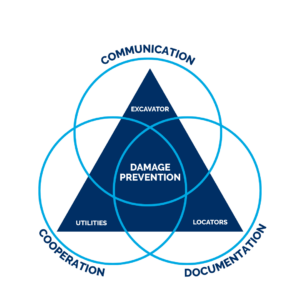 Each side of that triangle depends on three principles that hold it together: Communication, cooperation, and documentation.
When those three elements are working the way they should, the system works. When one side weakens, the chances of damage increase. And when damage happens, safety is at risk.
Arborists may not always think of themselves as excavators. However, vegetation work often overlaps with activities that affect the ground. Equipment gets staged. Outriggers get set. Access paths get improved. Anchors get installed. Vegetation crews frequently work alongside construction and telecom contractors.
In today’s utility corridors, everyone is sharing the same space. That means vegetation management has an important place in the triangle as well.
Vegetation Work Meets Underground Risk
Think about some common situations in UVM.
- Anchor installations during pole replacements
- Setting outriggers for bucket trucks
- Running heavy equipment through shared corridors
- Clearing storm debris near damaged poles
- Improving access routes inside rights of way
- Working near telecom crews installing fiber
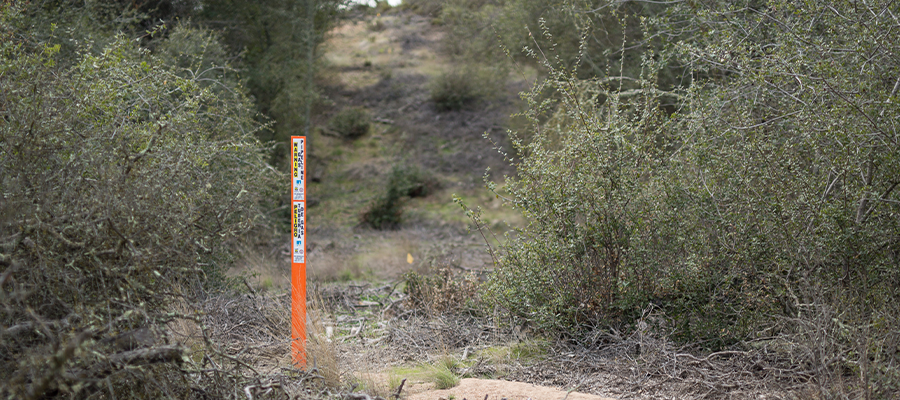
In each of these situations, there are underground facilities nearby. Even if the job is focused on overhead clearance, those buried utilities are still present and still vulnerable.
The rapid expansion of broadband infrastructure has added another layer of complexity. Fiber is often installed in existing utility corridors. That means arborists may be working next to excavation crews more often than ever before.
More activity in the same space means more opportunity for something to go wrong.
This is where the Triangle becomes important. It reminds us that safe operations require more than correct markings. They require people who are paying attention and working together to keep the site safe.
Communication in the Corridor
Communication forms the first side of the triangle.
For vegetation crews, communication often begins before anyone arrives on site. Has the scope of work changed since the original plan? Is underground work happening nearby? Are other contractors scheduled to be in the same corridor?
It is easy to assume that if a project is focused on trees, underground risk is minimal. However, assumptions are where many safety incidents begin.
Communication in the field matters just as much. If something does not match the markings, if exposed facilities are discovered, or if conditions change during the job, crews must feel comfortable speaking up.
Strong safety cultures encourage questions. They do not punish them.
This becomes even more important during storm response when crews are working quickly and conditions are constantly changing.
Cooperation Across the Corridor
The second side of the triangle is cooperation.
Utility corridors today are crowded spaces. Electric, gas, telecom, broadband, water, and municipal infrastructure all share the same rights of way. Vegetation management teams often work alongside construction crews, contractors, and utility employees.
Damage prevention works best when everyone recognizes that safety is a shared responsibility.
Utilities provide information and oversight. Locators provide accurate markings. Crews in the field operate responsibly within those markings and raise concerns when something does not look right.
Vegetation professionals often serve as an additional set of eyes in the corridor. They may notice exposed lines, outdated prints, or conditions that do not match expectations.
When cooperation exists, those observations help strengthen the system and improve safety for everyone on site.
Documentation as Protection
Documentation forms the third side of the triangle.
It might not be the most exciting part of the job, but it is one of the most important tools we have.
Clear notes on tickets, updated prints, field photographs, and follow-up communication create a shared record of what was discussed and what was agreed upon. That record protects crews, utilities, and infrastructure.
For vegetation professionals, documenting unusual conditions can also prevent future incidents. If erosion exposes a buried facility, if prints appear incorrect, or if private utilities are discovered, accurate documentation helps make sure that information reaches the right people.
Documentation reinforces accountability and strengthens safety practices across the entire team.
Situational Awareness in the Field
If communication, cooperation, and documentation form the triangle, situational awareness is what keeps it strong.
Marks can be correct, and risk can still exist. A ticket can be active, and conditions can still change. Compliance can be achieved, and damage can still occur.
Utility arborists are already trained observers. Every day, they evaluate tree structure, lean, decay, and environmental conditions. That same awareness can help prevent underground incidents.
Situational awareness means noticing when ground conditions do not match markings. It means recognizing when equipment placement could create unintended risk. It means asking clarifying questions before work begins.
Sometimes the safest decision a crew can make is to pause and make sure something makes sense.
Protecting the Whole System
As infrastructure continues to grow, utility corridors will only become more complex. Broadband expansion, system upgrades, and increased demand for reliable service mean more crews working in the same space.
Utility vegetation management is no longer just about what happens above ground. It is part of a larger system that includes both underground and overhead infrastructure.
The Triangle of Damage Prevention offers a simple framework for thinking about safety in that environment. Communication keeps everyone informed. Cooperation keeps everyone aligned. Documentation keeps everyone accountable.
And situational awareness helps ensure that safety decisions are made in real time, where the work is happening.
Damage prevention is ultimately about protecting people.
When the triangle remains strong, crews work safer, infrastructure stays protected, and the entire system benefits from the canopy above to the utilities below.
This article was originally published in the 2026 May/June edition of the UAA Newsline.
Related Articles
Wildfire Risk & Defensibility: When Risk Becomes Liability By Bob Urban, Senior Account Manager, ACRT Services Every wildfire season raises the same question for utilities: Are we prepared? As wildfire frequency, intensity, and public, investor, and insurer scrutiny continue to increase, utilities face growing pressure to demonstrate not only that they managed vegetation risks, but[...]
Read More